Favignana: The Hidden Italian Island That Resets Your Soul

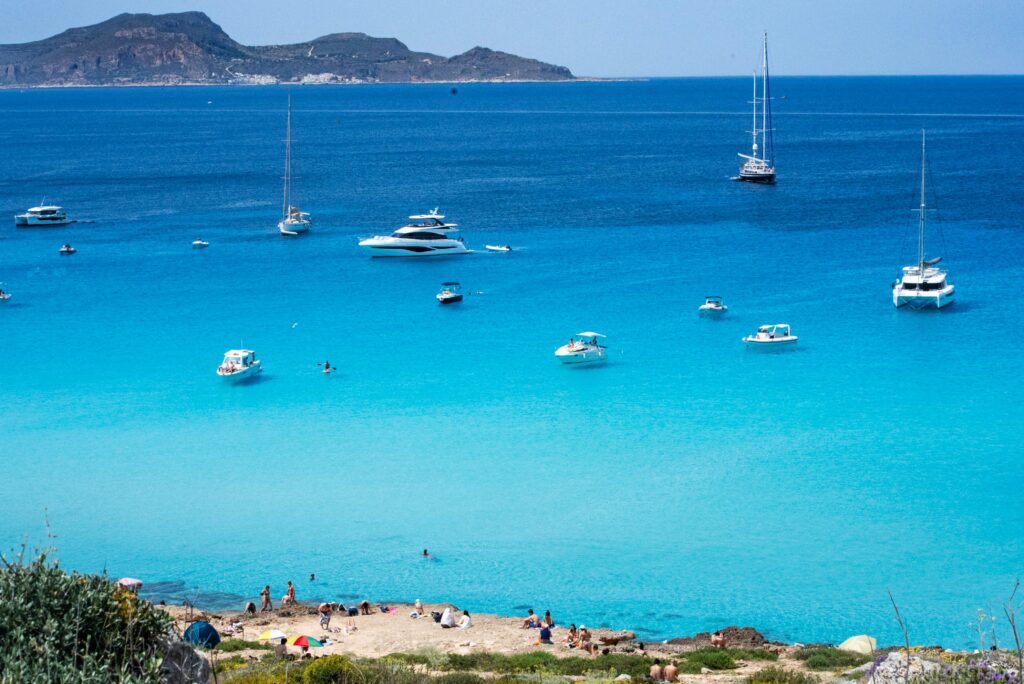
From Trapani, the ferries drift out toward the Egadi Islands, and the one you really can’t miss is Favignana. Just 30 minutes across the water, this island is the largest of the Egadi trio — a butterfly-shaped slice of paradise floating in the Mediterranean. The moment you step off the boat, the sun greets you like a heavy blanket — hot, almost overwhelming — but the sea instantly makes up for it. The water here is unreal, a turquoise so clear it looks like someone turned up the saturation just to show off.
Cala Rossa is the jewel, and for good reason. Once a tufa stone quarry, it’s now a natural amphitheater of cliffs surrounding water so transparent you can see every ripple of sand on the seafloor. Then there’s Cala Azzurra, where the sea shimmers with shades of blue you didn’t know existed, and Lido Burrone, the island’s most “classic beach,” perfect for a lazy swim. Favignana is tiny — only about 7 miles long — but it’s packed with hidden coves and beaches that all feel like they belong to you.

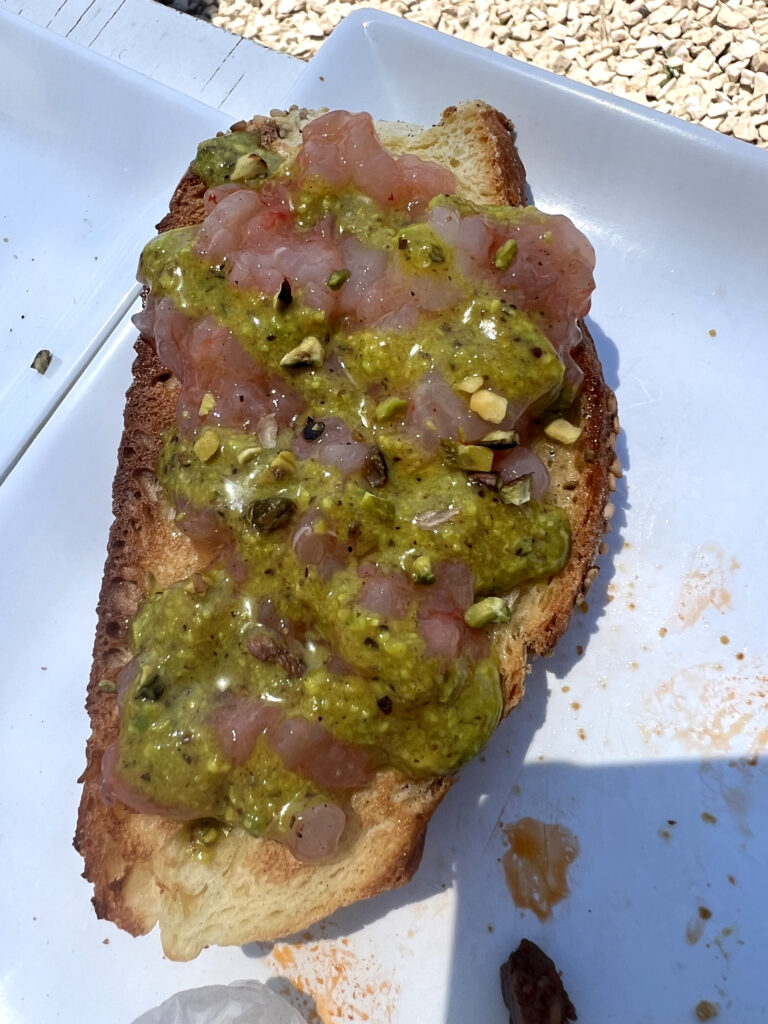
And the food? Just as dreamy. Favignana is famous for tuna, thanks to its centuries-old tuna fishing tradition known as the mattanza. While the traditional ritual has ended, tuna still rules the menu here. Fresh tartare, pasta with tuna bottarga (cured roe), or just thick slices grilled and kissed with olive oil — it’s all a reminder that this island has lived and breathed the sea for generations. You’ll also find pasta with sea urchin, caponata that tastes like sunshine, and those simple slices of bread drizzled with olive oil that somehow taste like a full meal.
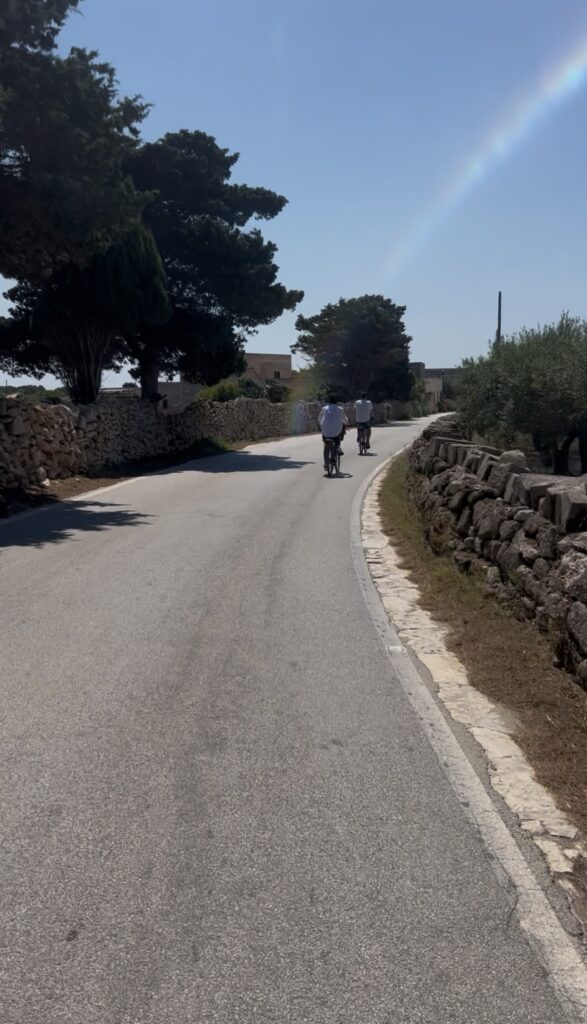
But the real secret to Favignana isn’t on a plate — it’s on two wheels. Renting a bike is the only way to see this island. Cars feel clumsy here, like they don’t belong. On a bike, you move at Favignana’s pace, pedaling past stone walls, fields of ruins, and sudden glimpses of turquoise coves. The roads are flat and easy, and with the island being so small, you can circle it in hours — though chances are you’ll stop so often for swims and spritzes.
And here’s a detail I love: Favignana may feel wild and remote, but it has a long history of being “the place to escape.” The Florio family — once Sicily’s wealthiest dynasty — made it their summer retreat, leaving behind grand villas and the old tuna-processing plant, the Tonnara Florio. Today, it’s a museum where you can feel the island’s history woven into its sun-bleached walls.

Favignana is hot, yes. But it’s the kind of heat that slows you down just enough to notice how beautiful life can be. It’s an island that balances extremes — the fierce sun with the cooling sea, the simple meals with deep traditions, the long history with the breezy present. By the time you catch the ferry back to Trapani, you’re sun-drunk, salt-streaked, and happier than you thought possible.
Food & Aperitivo Culture in Favignana
Evenings in Favignana are a slow performance, and the food takes center stage. The island carries centuries of tuna tradition, and though the mattanza has ended, tuna is still the heart of the table. In small trattorias tucked along narrow streets, you’ll find thick steaks grilled with just olive oil, lemon, and sea salt — proof that the simplest preparation is often the most divine. Tuna tartare, often dressed with citrus or capers, is a refreshing counterpart to the day’s heat, while pasta with bottarga brings an earthy depth that tastes like the ocean itself.
And then comes aperitivo — a ritual, not a snack. In Favignana, you don’t grab a drink on the go; you linger. Imagine yourself seated in the piazza as the light fades, the air buzzing with soft conversation, your glass of Sicilian Grillo catching the last rays of sun. Plates of olives, salted almonds, and crusty bread arrive almost as if by instinct. A spritz glows amber-orange in the fading light, a drink that feels made for these hours.
Dessert is its own ceremony. Gelaterias tempt you with creamy pistachio, almond that tastes like marzipan in frozen form, and mulberry granita so vibrant it stains your tongue. Sitting on a bench with a dripping cone becomes its own kind of luxury — one only Favignana can teach you to savor.
Hidden Corners and Quiet Escapes on Favignana
Step away from the bustle of the piazza and Favignana begins to whisper. The inland roads are flat and welcoming, framed by prickly pear cactus bursting with fruit in late summer, and fields that seem more golden than green. Stone walls line the paths, each one uneven and hand-laid, a reminder of the island’s working past. You’ll pass weathered farmhouses, their shutters faded, their roofs sagging, but their presence undeniable — guardians of memories left behind.
The real magic of Favignana lies in its coves. Not every beach is marked on a map; some you stumble upon after turning down what looks like a dirt path, only to discover a patch of turquoise sea framed by cliffs. Cala del Pozzo is one such secret, a place where the water stays calm and the crowds never arrive. Here, lying on the sun-warmed rocks, you hear only the sea’s pulse — steady, eternal.
Even the silence feels alive on Favignana. The stillness is broken only by the flutter of cicadas, the occasional call of a seabird, or the crunch of bicycle wheels over gravel. Time feels stretched here, elastic, as though the island insists you surrender to its pace. And you do — happily.
The Contrast: Leaving Favignana vs. Staying the Night
At day’s end, the ferries line up to return to Trapani, filled with travelers sunburned, salty, and satisfied. From the deck, you watch Favignana fade into a silhouette, its butterfly wings folding into the horizon. The city lights of Trapani grow brighter, but something inside you feels dimmer for leaving.
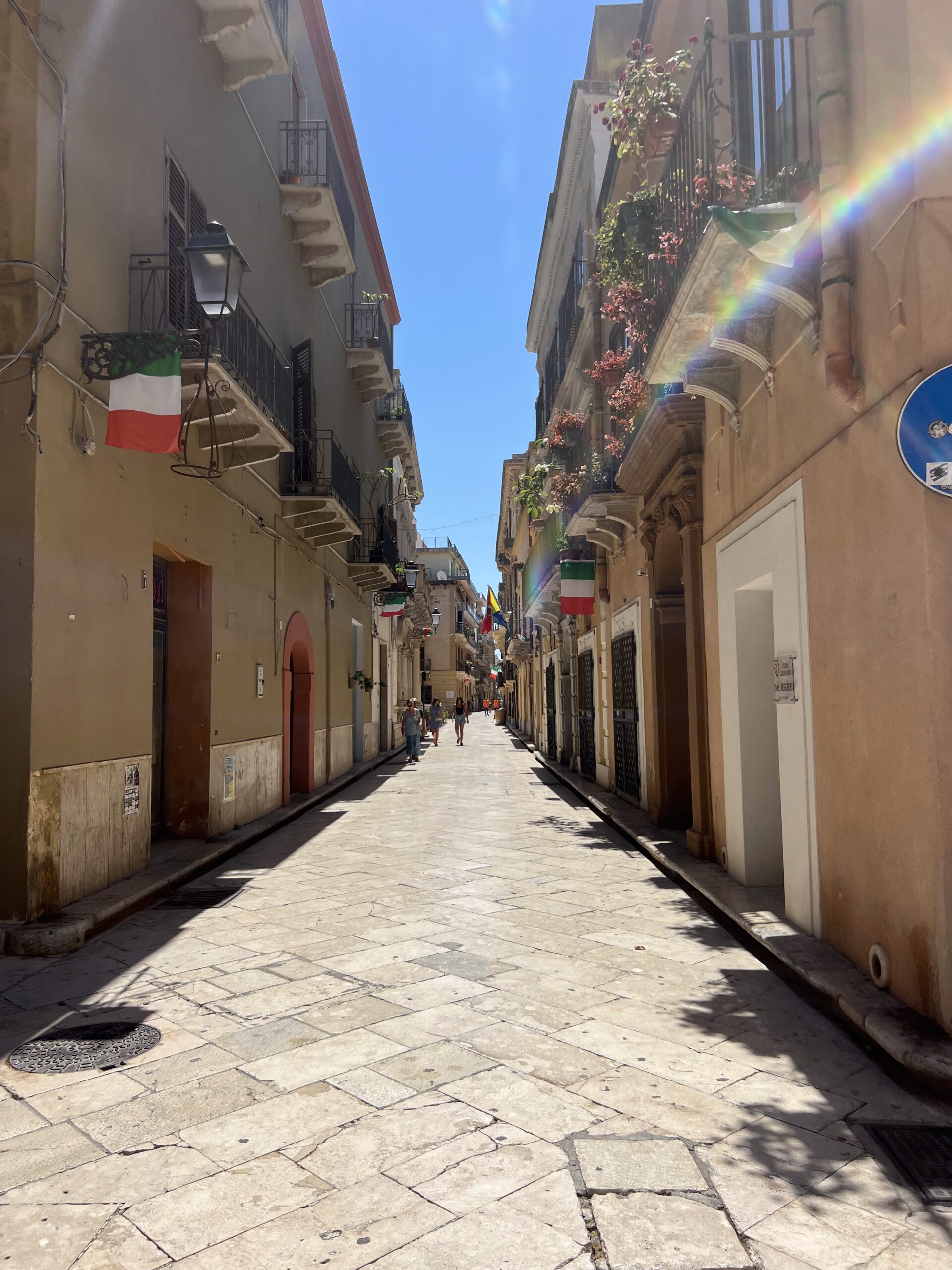
Staying, however, unlocks Favignana’s truest self. When the last ferry leaves, the island exhales. The chatter of day-trippers disappears, and a hushed calm spreads over the streets. Locals stroll casually through Piazza Matrice, stopping to greet neighbors in the glow of lamplight. Restaurants serve dinner without a hint of rush, the clinking of glasses mingling with the quiet hum of conversation.
The beaches transform too. Cala Rossa, so lively at midday, lies empty under a quilt of stars. The moon turns the limestone cliffs silver, and the sea mirrors the sky with a softness that feels otherworldly. On these nights, Favignana feels like a secret the world forgot to keep.
For those who linger, time slows even more. The stars are brighter than you expect, the air cooler, the island quieter. It feels as though Favignana saves its most intimate self for those who are patient enough to stay.
Why Favignana Stays With You
Favignana isn’t just another Sicilian stop; it’s a rhythm, a state of being. It teaches you to linger longer over meals, to notice the shades of blue in the sea, to surrender to heat that insists you move slower. The salt clings to your skin, the taste of tuna lingers on your tongue, and the rhythm of bicycle wheels over stone roads stays in your mind.
When you finally return to Trapani, sun-drunk and streaked with salt, you carry more than photographs. Favignana has etched itself into your senses — in the smell of grilled fish, the warmth of limestone under your palms, the echo of cicadas at dusk. You realize this isn’t just a place you visited. It’s a place that claimed you.
Rules, Traditions, and Everyday Life in Favignana
Life on Favignana may feel carefree, but it’s guided by rhythms, traditions, and even unspoken rules that have shaped the island for centuries.
1. The Afternoon Pause (Siesta Culture)
Shops, markets, and even bike rental stands close during the midday hours, usually between 1:00 p.m. and 4:00 p.m. This pause isn’t negotiable — it’s the island’s way of adapting to the relentless sun. For locals, it’s a time for rest or a long family lunch. For visitors, it’s a reminder to slow down: beaches stay open, but the village itself seems to nap.
2. Respect for the Sea
The sea is not just recreation in Favignana; it’s heritage. Even though large-scale tuna fishing is gone, there are still strong rules around respecting marine life and the coastline. Anchoring in protected coves is restricted, and diving in certain areas requires permits. Locals treat the water as both sacred and practical, and fishermen often remind outsiders not to waste a catch.
3. Bicycles Over Cars
While cars are allowed on Favignana, they are discouraged, especially in summer months when the island is busiest. The roads are narrow, flat, and better suited for bikes, which the community views as part of its identity. There’s almost an unwritten rule: if you can cycle, you should. It keeps the air clean, the streets quiet, and the pace of life gentle.
4. Piazza Etiquette
The main piazza in Favignana isn’t just a public square — it’s the island’s living room. Children play freely, families gather at dusk, and tourists blend in with locals over aperitivo. The unwritten policy here is simple: be part of the community, not just an observer. People greet each other warmly; ignoring a “buonasera” is considered impolite.
5. Tourism with Limits
Favignana has grown popular, but there’s a conscious effort to balance tourism with tradition. The Tonnara Florio museum, once a tuna-processing plant, is a reminder of this — preserving history while welcoming visitors. Summer festivals celebrate food and fishing, but locals protect their quieter months fiercely. Winter is not for tourists; it’s for the island itself.
6. Sustainability First
Plastic use is discouraged, and many beach kiosks and restaurants prefer recyclable or compostable packaging. It’s partly environmental policy, partly necessity — waste disposal on a small island is always delicate. Solar panels appear on rooftops, and water is carefully managed. The island’s size forces a kind of eco-awareness that feels more like common sense than a rule.
7. Living Outdoors
One of Favignana’s most charming traditions is the way daily life spills into the open. In the evenings, doors and windows are left wide open to the breeze, and families sit on stoops or balconies chatting with neighbors. Privacy exists, but community comes first — an unspoken social policy that makes Favignana feel like a village where everyone belongs.
Tips for Taking the Ferry to Favignana
Getting to Favignana is half the magic. The ferry ride itself sets the stage — you leave behind the bustle of Trapani’s harbor, and within half an hour, you’re gliding into turquoise water so clear it looks painted. But like all island crossings, there are a few things worth knowing before you step aboard.
Where to Catch the Ferry
The main departure point for Favignana is Trapani, a seaside town that doubles as the gateway to the Egadi Islands. Ferries run frequently throughout the day, especially in summer. You’ll see two types: the hydrofoil (aliscafo), which is sleek and fast, and the slower car ferry, which carries vehicles. If you’re only going for the day, the hydrofoil is the way to go — it cuts the journey down to about 30 minutes.
If you’re driving to Trapani, give yourself extra time to find parking. The streets around the port are busy and often crowded, especially in peak season. Many travelers choose to park in one of the public lots a short walk away — like Piazzale Ilio or Porto Trapani Parking, both of which are convenient for day-trippers. Paid street parking is another option, but spaces can be scarce and meters require coins. If you’re leaving your car overnight, a secured garage is worth the peace of mind. Once you’re parked, it’s an easy stroll to the ferry terminal, where the sea breeze already hints at the island waiting across the water.
There’s also a connection from Marsala, a little further south, but departures are less frequent. It can be a charming alternative if you’re already exploring Marsala’s salt pans or wineries before heading to Favignana.
Book Ahead (Especially in Summer)
During July and August, when half of Sicily seems to be chasing the sea, ferries to Favignana sell out quickly. If you have a specific time in mind — like an early departure to maximize your beach day — book tickets online a few days in advance. Off-season, it’s more relaxed. You can stroll up to the ticket booth in the morning and find plenty of space.
Boarding Rituals
Boarding in Trapani is its own little performance. Families, cyclists, and day-trippers all cluster near the gate, jockeying for position. Arriving 20–30 minutes early puts you at ease and gives you first pick of seats. Once the gates open, the process moves quickly: scan your ticket, follow the crowd, and find a spot.
If you’re prone to seasickness, grab a seat inside, near the center of the boat. If not, aim for the window. On the right side leaving Trapani, you’ll watch the coastline shrink, and on the left side returning, you’ll see Favignana’s butterfly shape dissolve into the horizon.
Luggage and Bikes
Most ferries allow a small backpack or carry-on for free, but larger bags often require an extra fee. If you’re planning to explore Favignana by bike (and you should), it’s easier to rent one once you arrive. Dozens of rental shops line the port, and you can be pedaling within five minutes of docking. Bringing your own bike is possible, but it adds cost and hassle.
Onboard Life
The ferry ride may be short, but it’s worth savoring. Grab a coffee or a snack at the harbor before boarding — the boats themselves usually keep amenities simple. As the hydrofoil pulls away, you’ll pass Trapani’s salt flats shimmering in the sun, fishing boats bobbing on the waves, and, if the sky is clear, the faint outline of Levanzo and Marettimo in the distance. It’s the kind of journey where the anticipation builds with every minute.
Weather Matters
The Mediterranean is usually calm, but wind can make the crossing lively. In rough seas, expect spray against the windows and a little bouncing on the waves. Locals take it in stride — reading the paper as if nothing’s happening — but if you’re sensitive, bring motion-sickness medicine just in case.
Don’t Miss the Last Boat
The most important rule: check the return times before you leave Trapani. In peak season, ferries run into the evening, but off-season, the last departure from Favignana can be surprisingly early. Missing it means you’re staying the night. Luckily, that’s not exactly a punishment. Favignana after the day-trippers leave is magical — quiet piazzas, star-filled skies, and a slower rhythm that feels like the island is letting you in on a secret.
A Local Secret
Here’s something most guidebooks won’t tell you: the ferry ride is best enjoyed with a Sicilian pastry in hand. Grab a warm cannolo or a brioche with granita from a Trapani café before boarding. That first bite as the ferry pulls away feels like the real start of the journey — a small reminder that in Sicily, food and travel are never separate.