
The Mediterranean Magic From Rodeo Drive: Piazzas to Palms
When your college son actually wants to hang out, you drop everything.
No hesitation. No “let me finish this first.” No “give me an hour.”
You grab your keys like you’re late for a flight and pray there’s parking near the beach.
So there I was — sitting in Santa Monica near the pier, pretending to read but really just waiting for my son to get off work. The weather was showing off that morning — sunny, warm, the kind of soft, golden light that makes you forgive every bad decision you’ve ever made. Joggers breezed by, families pedaled along the boardwalk, and couples strolled hand in hand with that easy, new-relationship glow.
And me? I was soaking it all in — the hum of the ocean, the faint scent of sunscreen in the air, the salty wind that plays with your hair no matter how hard you try to tame it. There’s something about Santa Monica that always resets me. Maybe it’s the rhythm of the waves, or maybe it’s knowing my son is just a few blocks away, living his own life, building his own story.

When he finally texted, I told him I had a place in mind for lunch — a sandwich shop that had been sitting on my “must-try” list forever: California Lorenzo.
And yes, I picked it because of the name. My son’s name is Lorenzo, so obviously I had to. What kind of mother would I be if I didn’t?
Turns out, it’s tucked near Rodeo Drive. Now, that’s not exactly my usual hangout. I’m not in my “designer bag era” anymore. I’m in my experiences over things era — the one where overpriced handbags feel less appealing than a good story and a strong espresso. But still… curiosity won.
And wow. Rodeo Drive hit differently that day.
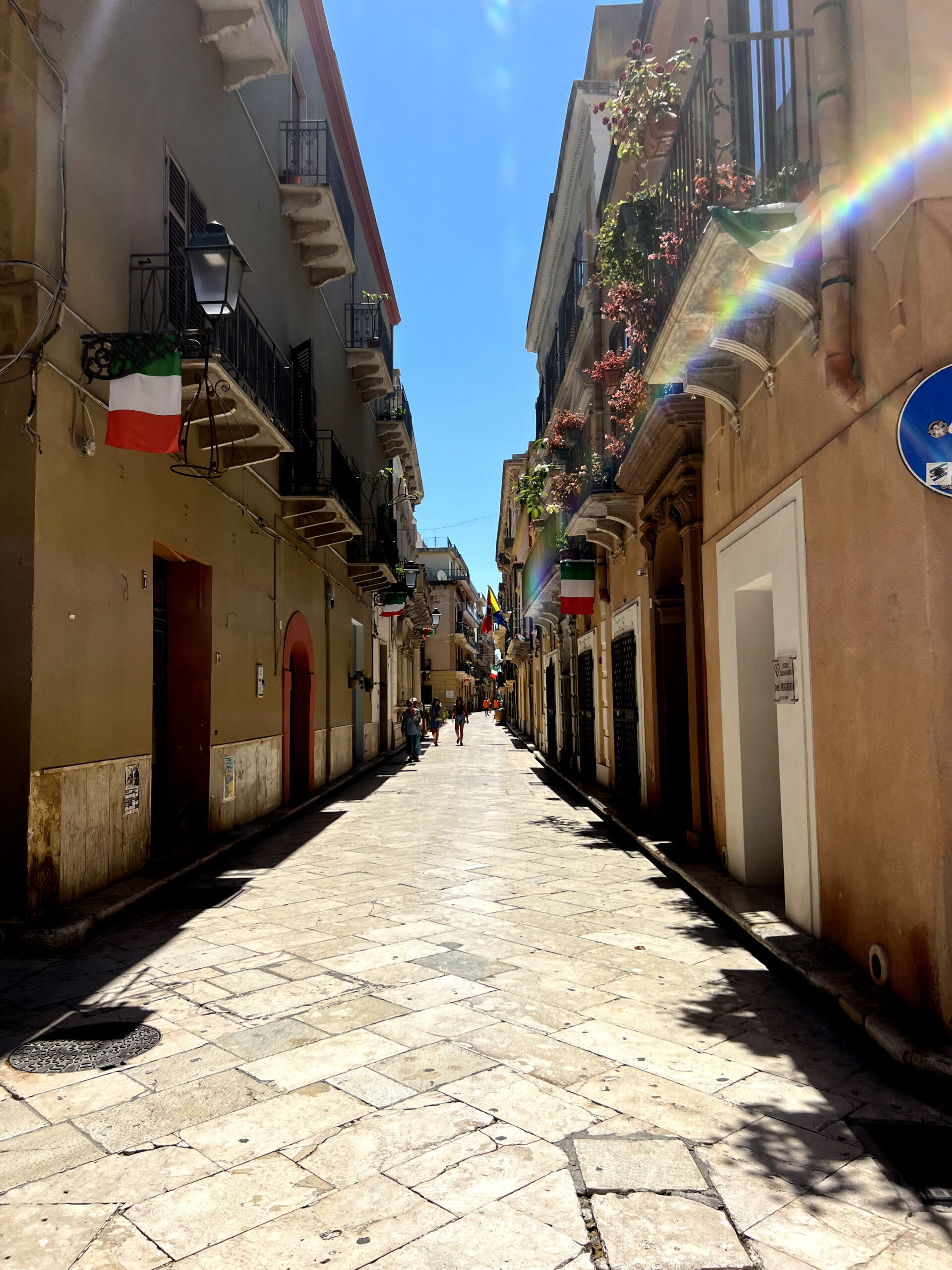
For all its sparkle and status, there’s something quietly Mediterranean about it — something I’d never really noticed before. Maybe it’s the way the light hits those pale stone façades, bathing everything in a honey-gold glow. Or maybe it’s the tall palm trees lining the boulevard, swaying like they’ve got all the time in the world. For a split second, if I squinted, I could’ve sworn I was in Italy.
It wasn’t the usual Beverly Hills chaos. It felt slower. Softer. There’s a kind of quiet luxury there that doesn’t need to announce itself. The kind that lingers. You see it in the way people stroll instead of rush, in the way a cappuccino becomes an event, not a caffeine fix. It’s la dolce vita — just with valet parking and California plates.
Even the buildings seemed to be in on it — soft stucco walls, arched windows, and that creamy, sun-warmed stone that catches light like it’s being filmed. The air smelled faintly of perfume and espresso, and for a heartbeat, it could’ve been summer in Capri.
That’s what I love most about moments like this — when a place surprises you. When it makes you pause, slow down, and look closer. Beneath all the glitter and designer logos, there’s a quiet echo of the Mediterranean way of life: beauty as an experience, not a performance.
And then it hit me — Rodeo Drive isn’t just a shopping street. It’s a stage.
People come here not only to buy but to be. They sit in who they want to be, even if just for the afternoon. They slide on sunglasses, lean back in café chairs, and let themselves imagine — What if? What if I could afford that bag? That car? That life?
And weirdly, there’s something kind of beautiful about that. Because even if everyone’s pretending a little, they’re also slowing down. They’re daydreaming. They’re taking an internal inventory — of who they are, who they’ve been, and who they might still become.
That’s the thing about Rodeo Drive — it looks like luxury, but it’s really about aspiration. People-watching here feels like flipping through a live mood board of human dreams. It’s not about what anyone’s wearing or buying. It’s about how they carry themselves. The quiet confidence. The curiosity. The playfulness of it all.
And maybe that’s why, on that warm afternoon, it felt so familiar. Because deep down, California really is our own version of the Mediterranean.
We’ve got the same golden light. The same coastal air that smells faintly of salt and citrus. The same reminder to savor the moment before it slips away. Sure, the accents are different, and the wine’s probably more expensive, but the spirit — that soft, sun-soaked rhythm of life — it’s the same.
After lunch, Lorenzo and I sat outside, sharing bites and people-watching. The sandwich was perfect — crisp bread, melted cheese, a hint of basil — simple but done right. The kind of meal that doesn’t need to impress because it already knows it’s good.
We talked about work, life, little things. The kind of conversation that doesn’t rush. That unfolds the way conversations should when there’s no timer, no phone buzzing, no one checking their watch.
And in that moment, I thought: this is what matters.
Not the brand names. Not the polished storefronts. Just this — sunlight, laughter, and a sandwich that happened to share my son’s name.
Because here’s the thing — when your college kid says, “Hey, wanna grab lunch?” you say yes. Every time. You cancel whatever can wait. You shut your laptop, forget your to-do list, and drive toward the coast.
You sit under the California sun, order something you’ve been meaning to try, and let the day unfold however it wants to. Because these moments? They don’t last forever.
Kids grow up. Routines change. Life gets louder.
But the quiet, unexpected ones — the ones where time slows down and the world feels golden — those are the ones you keep.
So yeah, when I think back on that day, it wasn’t just about Rodeo Drive or sandwiches or the perfect weather. It was about presence. About remembering that the Mediterranean mindset — that love of slowing down, savoring beauty, and being truly there — doesn’t require a plane ticket.
And if you’re lucky, it comes with sunshine, good bread, and a little slice of Italy right in the heart of California.
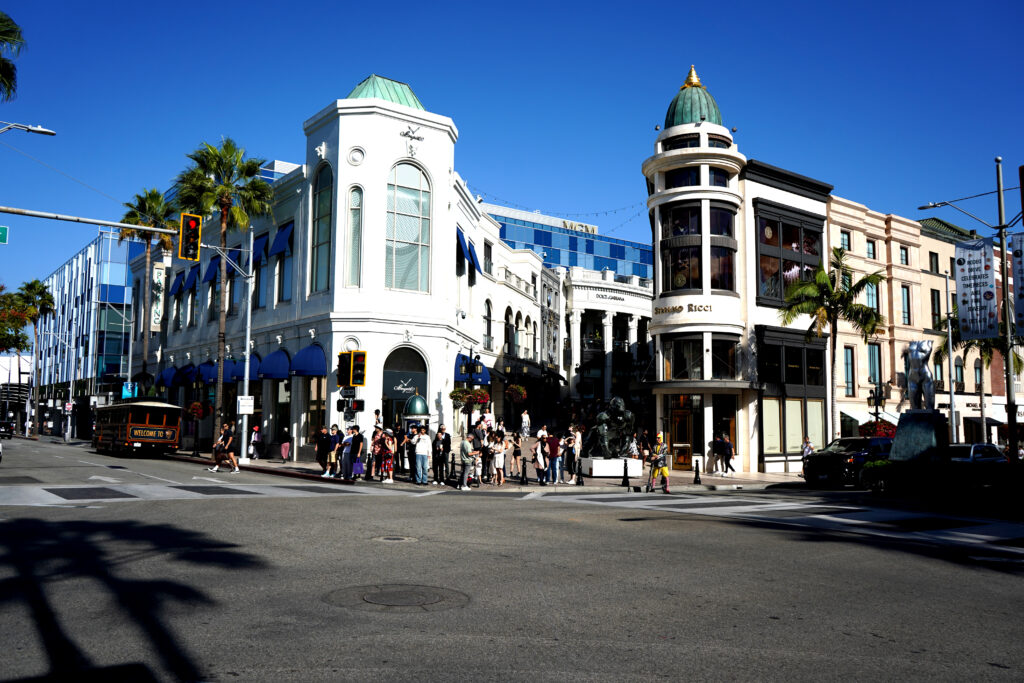
Rodeo Drive: Where California Sun Meets Mediterranean Soul
There’s something magical about Rodeo Drive. Maybe it’s the way the sunlight bounces off pale stone buildings, or how the palms sway like they know they’re in the presence of fame. But if you look beyond the designer bags and Lamborghinis, you’ll find a story that runs much deeper — one that feels distinctly Mediterranean at heart.
Because Rodeo Drive, at its core, isn’t just about luxury. It’s about reinvention, beauty, and the art of slowing down — three things Italians, and Californians, both understand perfectly.
Let’s take a walk through its history, shall we?
9 Things You Probably Didn’t Know About Rodeo Drive
(Spoiler: It hasn’t always been about Gucci and Lamborghinis.)
1. It Began as Land, Not Luxury
Before Rodeo Drive was the most glamorous street in America, it was a quiet, sun-drenched stretch of ranch land called Rancho Rodeo de las Aguas — the “gathering of the waters.” Long before the perfume-scented sidewalks and polished storefronts, this was open countryside, shaped by the rhythm of seasons and streams that trickled down from the nearby canyons.
In the 1830s, the land belonged to Doña Maria Rita Valdez de Villa, a widow who ran the ranch herself — rare for the time. She entertained guests, managed livestock, and lived with the kind of independence that would later define California itself. The land was covered in wild grapes, barley, and rose bushes. People came not to shop but to live, to farm, to breathe.
It’s hard to imagine now — where Lamborghinis idle at red lights, there were once horses trotting through dust. The hum of designer stores replaced the sound of wind through open fields. But that’s what makes Rodeo Drive so fascinating: beneath all the shine, its roots are humble. It’s a story of transformation, of a place that’s always known how to reinvent itself.
2. The Visionaries Who Drew It on a Map
Fast forward to 1906, when a man named Burton E. Green and his team of investors saw potential in that very same land. Los Angeles was booming, and they wanted to build something extraordinary — a retreat for dreamers, artists, and those craving a slower pace of life. They called it Beverly Hills, and with it came a simple dirt road named Rodeo Drive.
Back then, lots sold for around $1,100 — a bargain for paradise. It was quiet, charming, and suburban before “suburban” was even a word. The goal wasn’t glamour. It was comfort. Green envisioned tree-lined streets, beautiful homes, and space to breathe. Rodeo wasn’t even paved yet — just a country road running toward possibility.
But the thing about Los Angeles is that it doesn’t stay small for long. Within a few decades, oilmen, film stars, and visionaries were buying up land faster than you could say “gold rush.” The humble road started to glow. What began as a simple line on a map was becoming a cultural artery — one that would pulse with fame, fortune, and an unmistakable California shimmer.
3. When Horses, Not Teslas, Owned the Road
Imagine this: it’s 1912. The Beverly Hills Hotel has just opened, its pink stucco walls surrounded by little more than palm trees and dirt roads. Rodeo Drive is still quiet — so quiet, in fact, that people ride horses down it to get to brunch. Seriously. It was a bridle path long before it was a shopping mecca.
The Pacific Electric “Red Car” streetcar clanged through the area too, carrying passengers from downtown Los Angeles to the new “country escape” of Beverly Hills. Locals would wave from their front porches as the train rattled by. There were no crowds, no flashes of paparazzi — just families, sunshine, and the slow hum of an idyllic California day.
Those early years shaped Rodeo’s DNA: laid-back luxury. Even when the world around it started changing — film studios sprouting nearby, silent movie stars moving in — Rodeo kept that easy rhythm. Horses would become cars, and cottages would turn into boutiques, but that relaxed energy never really left. Maybe that’s why walking down Rodeo still feels a little cinematic — like life is moving at half-speed, bathed in perfect light.
4. Before the Glitz: A Street of Regulars
It’s wild to think that Rodeo Drive once had a hardware store. And a gas station. And a bookstore that smelled like dust and paper instead of Chanel No. 5. In the mid-1900s, Rodeo was an unassuming main street where locals came to run errands and chat with neighbors.
There was no Gucci or Prada, no velvet ropes or paparazzi waiting for someone “important.” It was community. People bought their paint, grabbed a haircut, maybe picked up a new dress for church. It was practical, lived-in, and human.
But like all good California stories, things were about to shift. The film industry exploded. Movie stars started calling Beverly Hills home. And where the stars go, glamour follows. Within a few short decades, Rodeo Drive would trade its hardware stores for haute couture — but that old soul of accessibility, that neighborhood friendliness, still lingers. Beneath the marble façades and mirrored windows, Rodeo is still that same street at heart — a place where people come to see, to be seen, and maybe to dream a little.
5. Fred Hayman: The Man Who Bottled Beverly Hills
Every city has one visionary who changes everything. For Rodeo Drive, it was Fred Hayman. In 1961, this Swiss-born hotelier opened Giorgio Beverly Hills, a bold new boutique at 273 Rodeo Drive. It didn’t just sell clothes — it sold a lifestyle.
Hayman was the first to infuse Rodeo with glamour. His shop had yellow-and-white striped awnings, champagne for shoppers, and an ambiance that felt more Riviera than retail. There was even a lounge for husbands, complete with a bar and pool table. He turned shopping into an experience — sensual, leisurely, indulgent.
And then came the fragrance. Giorgio Beverly Hills perfume launched in 1981, filling department stores (and every woman’s purse in America) with that unmistakable scent of California luxury. Overnight, Rodeo Drive went from local curiosity to global status symbol.
Fred Hayman didn’t just create a boutique — he bottled the essence of Beverly Hills. He gave Rodeo its attitude: glamorous but approachable, polished but playful, luxurious but sunny.
6. The Glamour Parade Begins
Once Giorgio Beverly Hills became a phenomenon, the floodgates opened. Gucci was one of the first international fashion houses to stake its claim, followed by Van Cleef & Arpels, Chanel, and Tiffany & Co. Soon the boulevard sparkled like a couture constellation.
By the 1970s, Rodeo Drive had become the go-to destination for designers and dreamers alike. Vidal Sassoon opened his iconic salon, redefining style from the neck up. Ralph Lauren chose Rodeo for his first freestanding Polo store, setting the tone for American luxury.
But Rodeo wasn’t just about what you could buy — it was about what you could feel. The music drifting out of shop doors, the click of heels on marble, the rustle of silk as someone turned to admire their reflection. Shopping here became less of a transaction and more of a performance. Every visitor played a part, every window a stage.
It was la dolce vita with a California accent — beauty for beauty’s sake, and nobody apologized for it.
7. Bijan: The Bold and the Brilliant
Then came Bijan Pakzad — the Iranian-born designer who decided in 1976 that Rodeo Drive needed a little more… audacity. He opened Bijan, famously calling it “the most expensive store in the world.”
The appointment-only boutique became a legend. Clients like Tom Cruise, Barack Obama, and Prince Charles wore his designs, and his personal Rolls-Royce (painted a custom canary yellow) became a fixture out front. It wasn’t just a store — it was theater.
Bijan embodied what Rodeo was becoming: unapologetic luxury. But he also brought humor and warmth to it — a twinkle in the eye that said, this is outrageous, but isn’t it fun?
By the 1980s, Rodeo Drive wasn’t just an address; it was a global fantasy. A single block that represented aspiration itself. City records even show that nearly a quarter of Beverly Hills’ tax revenue came from this tiny stretch of pavement. Talk about high returns.
8. Two Rodeo: Europe Meets California
By the 1990s, Rodeo’s identity was set — but it wasn’t done evolving. In 1990, the city unveiled Two Rodeo Drive, a cobblestoned, European-style shopping plaza that looked like someone air-dropped a piece of Florence into Beverly Hills.
It featured charming staircases, ornate balconies, and stone archways — all surrounded by the scent of espresso and the soft hum of conversation. If Rodeo was about grandeur, Two Rodeo was about atmosphere. It invited people not just to shop, but to linger.
Here, you could sip cappuccino under a wrought-iron balcony while admiring a Bentley reflection in a boutique window. It was theatrical, romantic, and slightly over-the-top — which, of course, made it perfect.
Two Rodeo blurred the line between Europe and California — between fantasy and reality. It proved that Rodeo Drive wasn’t just keeping up with luxury; it was redefining it, one cobblestone at a time.
9. The Glow-Up: Palm Trees and Walks of Style
In 2003, Rodeo Drive got an $18 million facelift — a glow-up worthy of its reputation. The city widened sidewalks, replaced ficus trees with slender palms, and added new street lighting to make the boulevard sparkle even brighter at night. The goal was simple: to make walking down Rodeo feel like an experience, not a chore.
That same year, the Rodeo Drive Walk of Style was unveiled, honoring fashion icons who shaped global style. Bronze plaques embedded in the pavement celebrate names like Armani, Versace, Tom Ford, and Manolo Blahnik — each signature immortalized under the California sun.
At the corner of Dayton Way, sculptor Robert Graham’s gleaming Torso statue became the symbol of the Walk. It’s a tribute not just to design, but to form, art, and the beauty of the human silhouette.
Together, the makeover and Walk of Style turned Rodeo into more than a shopping street — it became an open-air museum of fashion, architecture, and light.
A little reflection: A California Kind of Dolce Vita
Every city has its icons. Rome has the Colosseum. Paris has the Champs-Élysées. And California? We have Rodeo Drive — a street that somehow captures everything we love about life on this coast.
It’s golden, effortless, a little over the top — but grounded in something real: pleasure. The joy of slowing down, savoring beauty, and letting the sun hit your face.
Because Rodeo Drive isn’t just a place to shop. It’s a reminder — that luxury isn’t what you buy. It’s how you live.