How to Make a Mediterranean-Style Green Bean Casserole for Thanksgiving
There are a few dishes that whisper “Thanksgiving” the moment they hit the table — before the first bite, before the first toast, before the candles even flicker. For me, it was always the green bean casserole. That bubbling pan, edges caramelized and golden, pulled from the oven while chatter hummed around the kitchen. The air thick with cream and nostalgia, the kind of smell that felt like a hug. It wasn’t fancy. It didn’t have to be. It was comfort by the spoonful — the kind of dish that brought everyone back to the same conversation no matter how the year had gone.
But as I began leaning into the Mediterranean way of eating — slower, simpler, fresher — that creamy classic began to feel a little out of place. Heavy where I wanted light. Processed where I craved real. My pantry had quietly changed over the years: jars of sun-dried tomatoes where cans of soup used to sit, olive oil instead of butter, lemons instead of cream. Even the way I cooked began to shift — less about filling the plate, more about filling the moment.
So last fall, I decided to rewrite the story.
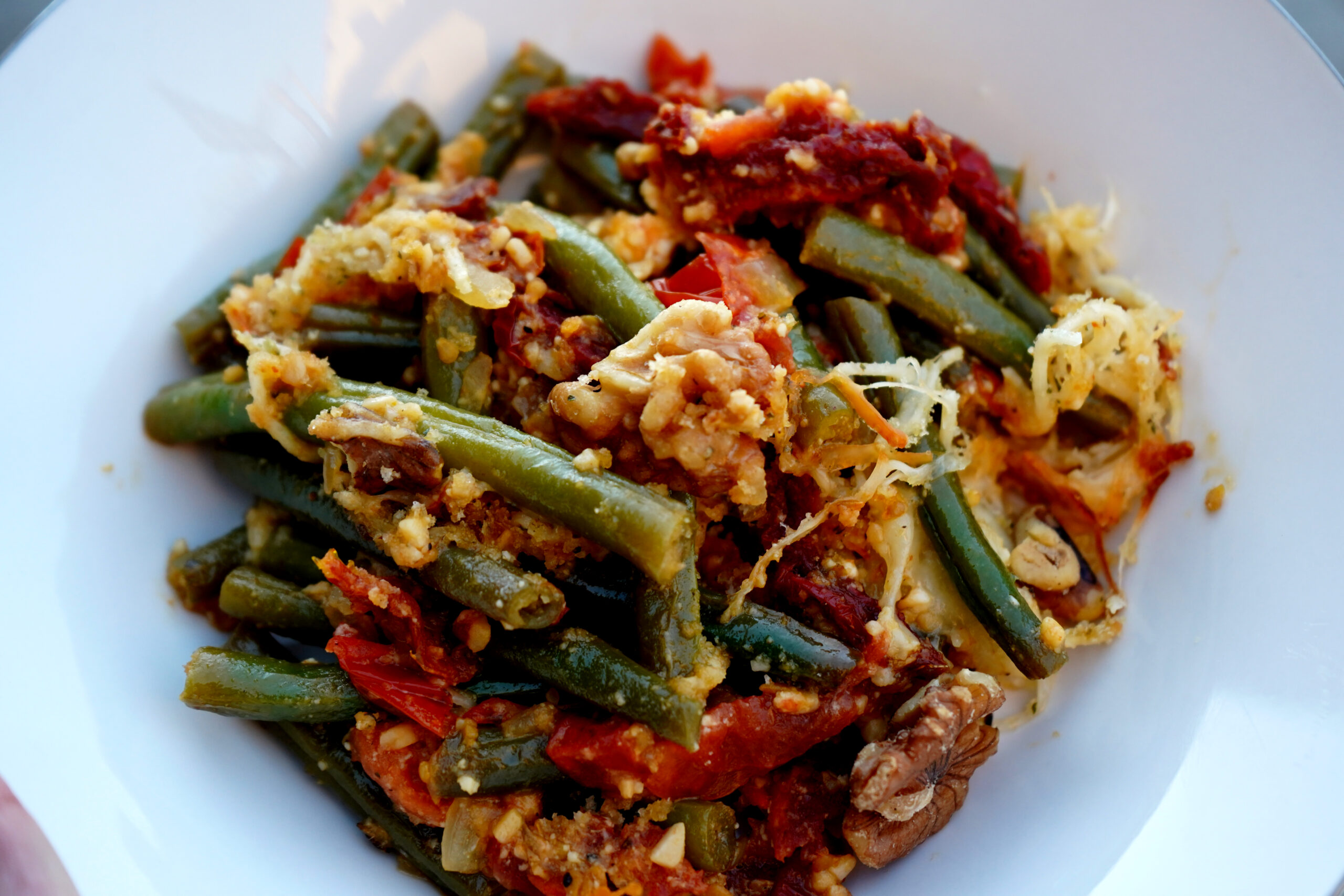
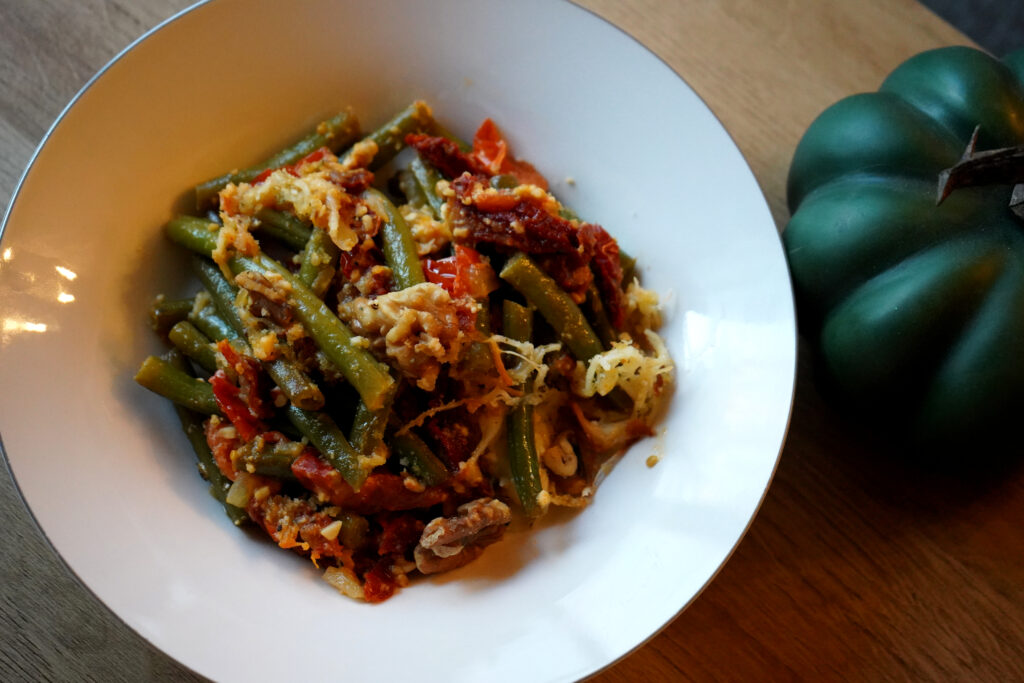
Out went the condensed soup and canned onions. In came a skillet of golden onions, sautéed until sweet, with garlic that perfumed the whole kitchen. Cherry tomatoes burst in olive oil, releasing that tangy sweetness that only fresh ingredients can give. A handful of briny kalamata olives brought depth, while a sprinkle of lemon zest and oregano tied everything together like a melody. When the first batch came out of the oven, it didn’t smell like the Thanksgivings I grew up with — it smelled like the ones I wanted to create now: bright, savory, alive with color and sunshine.
The crunch of toasted breadcrumbs replaced the fried onions. The feta melted just enough to mingle with the sweetness of roasted tomatoes. Pine nuts added that satisfying bite — a little golden crunch in every forkful. It was everything I loved about the original, only lighter, more vibrant, and somehow more me. Each bite tasted like gratitude — familiar yet renewed, rooted in memory but blooming into something new.
That’s what I love about a Mediterranean Thanksgiving. It isn’t about rewriting tradition — it’s about lightening it. About honoring the comfort but letting it breathe. About swapping heaviness for heart. Because when we strip away the shortcuts and return to real food, we find that the flavor deepens. The meal slows down. The gratitude feels bigger.
Now, every time I set this dish on the table, I still call it “green bean casserole,” but really, it’s something else entirely — a love letter to where I’ve been and where I’m going. A dish that bridges two worlds: the cozy kitchens of my childhood and the sunlit coastlines that continue to inspire the way I cook today.
And that’s the beauty of food — it evolves as we do. What once came from a can now comes from the garden. What once felt heavy now feels like sunlight.
Why the Classic Feels Heavy — and Why That’s Okay
Let’s be honest: the traditional green bean casserole was never about health; it was about heart. It was invented in 1955 by a Campbell’s Soup home economist named Dorcas Reilly — a clever way to help American households stretch their pantries. The recipe used shelf-stable ingredients (canned beans, canned soup, and canned fried onions), so it was quick, affordable, and accessible.
And for its time, it made perfect sense. The dish checked all the boxes: warm, creamy, savory, and rich. But what made it comforting then now makes it feel heavy — especially if you’ve shifted toward the Mediterranean lifestyle, where olive oil replaces butter, vegetables shine on their own, and freshness comes before filler.
Ingredient-by-Ingredient: A Modern Mediterranean Makeover
Below is a side-by-side breakdown of the traditional vs. Mediterranean green bean casserole — the ingredients, their roles, and what changes when you swap one for the other.
| Component | Traditional Version | Mediterranean Version | Why the Difference Matters |
|---|---|---|---|
| Green Beans | Usually canned or frozen; soft and salty | Fresh, blanched, vibrant in color and texture | Fresh beans retain nutrients like vitamin C and fiber that are lost in canning; they add brightness instead of mushiness. |
| Cream Base | Canned cream of mushroom soup (high in sodium, MSG, and preservatives) | Sautéed onions, garlic, cherry tomatoes, and olive oil | The Mediterranean base relies on whole foods for flavor; it’s lower in sodium, seed oils, and processed additives. |
| Fat Source | Butter and hydrogenated oils | Extra virgin olive oil | Olive oil contains heart-healthy monounsaturated fats and antioxidants; butter and processed oils increase LDL cholesterol. |
| Mushrooms | Often pureed inside the soup (minimal texture or flavor) | Optional fresh mushrooms, pan-sautéed | Using fresh mushrooms adds umami and texture without sodium overload. |
| Onions | Fried onions from a can | Caramelized onions, topped with toasted breadcrumbs | Caramelizing onions in olive oil enhances sweetness and depth; breadcrumbs add crunch without trans fats. |
| Topping | Store-bought fried onions | Panko or sourdough breadcrumbs, parsley, and Pecorino | The topping becomes crisp and herbaceous instead of greasy, adding both flavor and nutrients. |
| Seasoning | Salt and pepper | Lemon zest, oregano, fresh herbs | Herbs add complexity and antioxidants while reducing sodium dependence. |
| Dairy | Processed cream and milk solids | Crumbled feta or a touch of Greek yogurt | Swapping heavy cream for feta adds protein, probiotics, and tang without the bloat. |
| Umami Depth | From MSG in the soup | From olives, tomatoes, and aged cheese | Natural umami sources provide depth without synthetic additives. |
Flavor & Texture
The traditional casserole’s comfort comes from its uniformity — everything is soft, creamy, and melded together. It’s rich and cozy, but after a few bites, it can feel heavy.
The Mediterranean version, by contrast, is alive with texture. You get the snap of green beans, the silkiness of roasted tomatoes, the crunch of toasted nuts and breadcrumbs, the briny pop of olives, and the tang of lemon zest. Every bite is layered — light yet satisfying, comforting without being cloying.
The flavor shifts from dense and salty to bright and savory, and the experience of eating it changes too: it wakes up your palate instead of slowing you down.
The Nutritional Difference
To really understand how this swap transforms not just flavor but health, here’s a closer look at the approximate nutritional breakdown for a one-cup serving of each version:
| Nutrient | Traditional Casserole (1 cup) | Mediterranean Version (1 cup) | Difference |
|---|---|---|---|
| Calories | 225 | 160 | ~30% fewer calories; the Mediterranean version gets its richness from healthy fats instead of cream. |
| Total Fat | 14g | 9g | Lower in saturated fat; olive oil provides anti-inflammatory monounsaturated fats. |
| Saturated Fat | 6g | 2g | Butter and cream contribute to higher LDL cholesterol in the classic version. |
| Sodium | 720mg | 260mg | Huge reduction in salt due to ditching canned soup and fried onions. |
| Fiber | 2g | 4.5g | Fresh beans, tomatoes, and nuts double the fiber — better for digestion and fullness. |
| Protein | 3g | 6g | Feta, nuts, and olive oil provide added plant and dairy-based protein. |
| Added Sugars | 2g | 0g | The Mediterranean version contains no hidden sugars or syrups. |
| Antioxidants | Low | High | Lycopene (tomatoes), polyphenols (olive oil), and vitamin E give the dish longevity benefits. |
(Values estimated using USDA FoodData Central averages for standard ingredients.)
What This Means for Your Body
Switching from the traditional to the Mediterranean version isn’t just a matter of taste — it’s a shift toward longevity.
Heart Health
Olive oil’s monounsaturated fats have been shown to lower bad cholesterol (LDL) and raise good cholesterol (HDL), helping protect against cardiovascular disease. In contrast, butter and processed oils increase LDL and inflammation.
Anti-Inflammatory Benefits
Mediterranean staples like olive oil, garlic, and tomatoes are naturally anti-inflammatory, helping balance the body after a heavy meal. A traditional casserole, packed with preservatives, salt, and dairy, can trigger inflammation and bloating.
Gut Health
Fresh produce and fiber from beans, nuts, and herbs nourish healthy gut bacteria. The canned soup version, high in sodium and lacking in fiber, can dehydrate and slow digestion.
Longevity & Energy
Instead of the post-meal slump that comes from heavy cream and sodium, the Mediterranean casserole gives steady energy thanks to whole ingredients and slow-burning fats. It’s how people in Blue Zones — like Sardinia and Ikaria — eat daily, even during celebrations.
Emotional Nutrition: Comfort That Feeds, Not Fills
The traditional casserole comforts through nostalgia — it’s emotional warmth, a taste of home. The Mediterranean version doesn’t erase that feeling; it expands it. It invites comfort to coexist with clarity. You still get the cozy, communal spirit of Thanksgiving, but without the heaviness that lingers afterward.
There’s also something emotionally freeing about cooking with real ingredients — hearing onions sizzle, smelling garlic bloom, zesting a lemon over something you made by hand. It slows you down in the best way. That’s the kind of comfort that nourishes both body and spirit.
What You Gain by Letting Go of the Can
When you leave behind processed shortcuts, you make space for flavor — and for presence. You start to taste the ingredients for what they are, not what they’re masked to be.
The Mediterranean mindset isn’t about restriction; it’s about rediscovery. It’s realizing that you can still have richness without weight, indulgence without guilt, and comfort that doesn’t come at the cost of your health.
Every spoonful of this reimagined casserole feels like that — a little lighter, a little fresher, and a whole lot more alive.
The Bigger Picture: A Thanksgiving Shift
At its core, Thanksgiving is about gratitude — not gluttony. The Mediterranean way embraces that fully. The goal isn’t to eat less; it’s to eat better.
So maybe the casserole isn’t just a side dish anymore. Maybe it’s a quiet symbol of how food evolves alongside us — how we can hold onto the memories that matter while making space for the habits that sustain us.
Because comfort doesn’t have to come from cream. Sometimes it can come from light — from a drizzle of olive oil, a pinch of lemon zest, and a little intention in how we gather.
Both versions of the casserole have something to offer: one feeds your nostalgia, the other feeds your vitality. The beauty is, you don’t have to choose between them. You can honor both — the memory and the evolution.
But if your goal this Thanksgiving is to gather around a table that feels as vibrant as it does cozy, this Mediterranean version might be your new tradition in the making.
It’s not about perfection; it’s about balance. And balance, in every sense, is the Mediterranean secret worth giving thanks for.
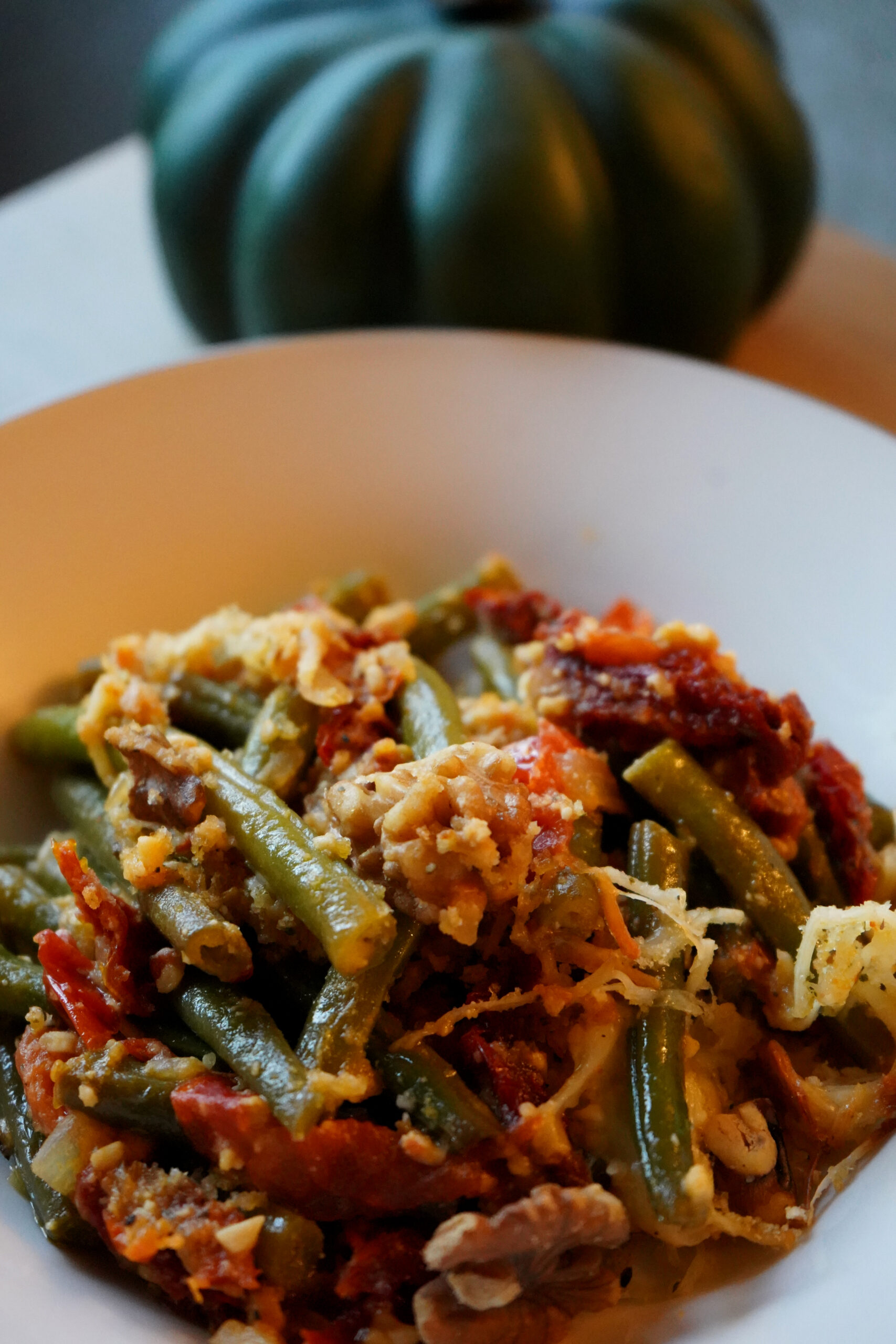
Mediterranean Green Bean Casserole
Ingredients
Method
- Bring a large pot of salted water to a boil. Add the green beans and cook 3 minutes until bright green. Drain and plunge into ice water to stop cooking. Pat dry.
- Sauté the aromatics.
- In a large skillet, warm 1 Tbsp olive oil over medium heat. Add the sliced onion and cook until golden and soft, about 7 minutes. Stir in garlic and cook 1 minute more.
- Add the cherry tomatoes and sun-dried tomatoes to the skillet. Cook until they soften and start to release their juices, about 3–4 minutes. Stir in the blanched green beans, lemon zest, oregano, olives, feta, and a sprinkle of salt and pepper. Toss to coat.
- Transfer to baking dish.
- Pour everything into a lightly oiled 2-quart baking dish. Sprinkle the toasted nuts evenly over the top.
- Make the crunchy topping.
- In a small bowl, mix breadcrumbs, cheese, parsley, olive oil, and (if using) red pepper flakes. Scatter this mixture evenly over the beans.
- Bake uncovered at 400 °F (200 °C) for 15–20 minutes, until golden and crisp on top.
- Drizzle lightly with olive oil before serving. The dish should be fragrant, nutty, and just a little tangy — a sunshine-filled cousin to the classic casserole.