Caprese Salad Like in Italy: Fresh, Simple, and Irresistible
The Caprese Salad is the Taste of Italian Summer
Some dishes are so simple, they feel almost too good to be true — and Caprese Salad is one of them. Just ripe tomatoes, fresh mozzarella, and basil, yet when they come together with a drizzle of olive oil, it’s pure Italian summer on a plate.
The first time I tasted it in Italy, it was served on a shaded terrace overlooking the sea in Capri, and I understood immediately why it became an icon. It’s not just a salad — it’s a celebration of freshness, seasonality, and the beauty of keeping things uncomplicated. The plate was arranged like a little work of art, slices of tomato and mozzarella alternating in a perfect circle, glossy green basil leaves tucked in between, everything glistening under a drizzle of golden olive oil.
The colors were the Italian flag — red, white, and green — and the taste was everything I imagined Italy to be: bold but balanced, simple yet unforgettable.
A Salad Born in Capri
Caprese Salad, or Insalata Caprese, was born on the island of Capri, a place that already feels like a dream with its cliffs tumbling into turquoise seas, lemon trees heavy with fruit, and villas perched above sun-splashed terraces.
The story goes that in the early 20th century, a patriotic chef created the salad to showcase the Italian tricolor on a plate. Others say it was simply the natural expression of what was ripe and abundant in the summer. Either way, its origins are poetic: a dish born from pride, seasonality, and a little bit of sunshine.
Like so many Italian classics, it never tries too hard. The ingredients do the work. The cook’s only job is to step aside and let them shine.
That First Bite
That day in Capri, I remember the way the tomato juices mingled with the olive oil, pooling slightly at the bottom of the plate. I used a piece of crusty bread to mop it up, and it was so good I almost forgot there was more food coming.
The mozzarella was unlike anything I had tasted before — creamy, delicate, fresh in a way that made me realize how far store-bought versions at home fell short. And the basil wasn’t just garnish; it was aromatic, peppery, almost floral, the perfect counterpoint to the richness of the cheese and the sweetness of the tomato.
It was so simple that it made me laugh. All my life I had thought great cooking required complexity, but here I was eating one of the best things of my life, and it had only three ingredients plus oil. Capri taught me a lesson that day: sometimes less really is more.
Bringing Capri Home
Back at home, Caprese Salad quickly became one of those dishes I returned to again and again, especially in the summer when tomatoes are at their peak. It became a way to bring a little bit of Italy into our kitchen.
The kids love helping with it, tearing basil leaves and sneaking bites of mozzarella while I slice the tomatoes. It’s a dish that invites participation because it’s nearly impossible to mess up. The hardest part isn’t the preparation — it’s finding the best ingredients.
When the tomatoes are perfectly ripe, bursting with sweetness, when the mozzarella is soft and fresh, when the basil has that just-picked fragrance, the salad doesn’t need anything else. A drizzle of olive oil, a sprinkle of sea salt, maybe a twist of black pepper if you want. That’s it.
Dinner can be as simple as Caprese with a loaf of bread and a glass of wine, and somehow it feels complete.
The Ritual of Simplicity
What I love about Caprese is how versatile it is. Sometimes I serve it as a starter, sometimes as a side dish, and sometimes it becomes the main event with a little prosciutto or grilled chicken on the side.
I’ve layered it into sandwiches, tossed it with pasta, even turned it into skewers for summer parties. And yet, no matter the variation, it always carries that same spirit: fresh, bright, and uncomplicated.
It’s the kind of dish that reminds you to respect the season, to eat what’s ripe and ready, to slow down and taste summer while it lasts.
The salad also carries a sense of ritual for me. When I make it, I almost always pause to appreciate the tomatoes as I slice them, the way their juices glisten, the scent of basil as it releases into the air, the cool softness of mozzarella in my hands.
It feels like an ode to simplicity, a reminder that beauty doesn’t have to be dressed up to matter. In fact, it often doesn’t.
Food like Caprese teaches you to slow down, to notice the details, to savor the little things. And that lesson goes far beyond the kitchen.
Tomatoes are the Heart of Caprese
The truth is, Caprese Salad rises or falls with its tomatoes. A watery, out-of-season tomato will never deliver the same magic as one grown in the summer sun.
In Italy, especially in Campania, you’ll find varieties like Pomodori di Sorrento — large, ribbed, and incredibly flavorful — or San Marzano tomatoes, famous for their balance of sweetness and acidity.
At home, I reach for heirloom tomatoes when they’re in season. Their irregular shapes and rainbow colors might not look uniform, but their flavor is unmatched. A mix of red, yellow, and even deep purple tomatoes can turn a simple Caprese into something stunning.
The key is ripeness. A tomato should be fragrant, heavy for its size, and give slightly when pressed. If you’re making Caprese in the dead of winter, it’s worth waiting — or using high-quality cherry tomatoes, which often carry more flavor off-season.
Mozzarella is the Soul of Creaminess
If tomatoes are the heart, mozzarella is the soul. True mozzarella di bufala, made from water buffalo milk in Campania, is rich, tangy, and impossibly creamy. The way it weeps milk when you slice it feels almost indulgent.
If buffalo mozzarella isn’t available, fresh cow’s milk mozzarella (fior di latte) is a wonderful substitute. What matters is freshness. The kind vacuum-sealed in brine is far superior to the rubbery blocks labeled “mozzarella” in the average supermarket.
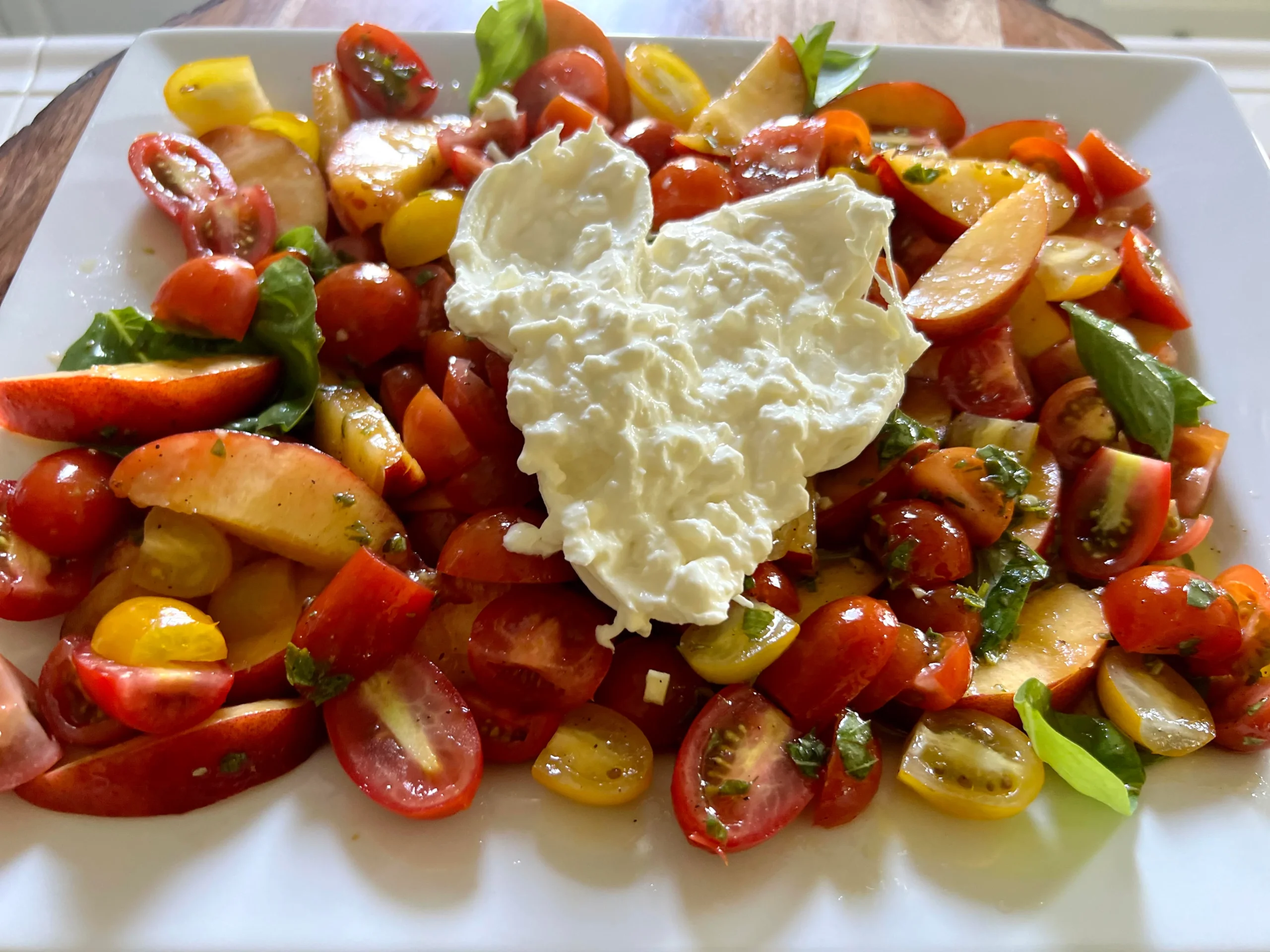
Another variation I love is burrata. Its creamy center makes Caprese almost decadent — a salad that feels like a treat.
But here’s the real challenge: how do you find mozzarella in the States that comes close to what you’d taste in Italy?
The key is to shop smart. Many large grocery chains now carry tubs of fresh mozzarella packed in liquid — always choose these over the pre-shredded or vacuum-packed blocks. The brine keeps the cheese moist, delicate, and milky, the way it should be. If you see “Made in Italy” on the label, even better. Some specialty stores import authentic mozzarella di bufala campana DOP, which is worth the splurge for a special meal.
If you’re lucky enough to live near an Italian deli, farmers’ market, or specialty cheese shop, ask about their mozzarella delivery days. Mozzarella is at its best within a day or two of being made, so timing matters. Some U.S. dairies now make fresh mozzarella daily, and it can rival imported versions simply because it hasn’t traveled as far.
In California and New York especially, you’ll find artisanal creameries that hand-stretch mozzarella in small batches. These are absolute gems for Caprese Salad — soft, pillowy, and delicate, with that fresh milky sweetness that takes the dish from good to unforgettable.
So, while it may not always be possible to replicate the exact mozzarella experience of Capri, choosing fresh, brined, and locally made versions will get you close. And when you slice into it, watching the milk slowly spill onto your plate, you’ll know you’ve found the right one.
Basil is The Perfumed Crown
Never underestimate the basil. It isn’t decoration; it’s the crown. Basil adds brightness, a peppery lift that cuts through richness and ties everything together.
The best way to use basil is fresh and torn by hand. Cutting it with a knife can bruise it and turn the edges dark. I like to scatter whole leaves across the salad so every bite carries its fragrance.
But here’s the secret: the basil matters as much as the tomatoes and mozzarella. If you’ve ever tasted basil in Italy, you know it has an intensity that feels almost impossible to replicate. It’s sweet, peppery, floral, and somehow richer all at once. Part of that comes from the soil and Mediterranean sun, but part of it is simply freshness. The closer the basil is to the moment it was picked, the more vibrant it tastes.
That’s why growing your own basil — even on a tiny windowsill — is worth it. You don’t need a garden, or even much space. A simple clay pot, a sunny window, and regular watering are enough to turn your kitchen into a little slice of Italy. Basil loves sunlight, so if you’re in California, you’re already in luck. Place the pot where it gets at least six hours of light a day, and it will thrive.
The trick is to harvest it often. Pinch off the top leaves instead of plucking from the bottom, and your plant will grow bushier and fuller. Think of it as a conversation: the more you engage with your basil, the more it gives back.
And when you tear a leaf fresh from your own plant and drop it onto warm slices of tomato and mozzarella, you’ll notice the difference. That immediate burst of fragrance is as close as you can get to tasting Italy without a plane ticket. It’s proof that sometimes the most authentic flavors don’t come from specialty stores, but from a little pot on your window ledge.
Olive Oil is The Golden Thread
Now we get to what Italians call oro liquido — liquid gold. Olive oil is not just a drizzle; it’s the golden thread that binds everything together.
The olive oil you choose can completely change the salad’s personality. A bold, peppery Tuscan oil will add spice and depth. A softer, fruity Sicilian oil will highlight the sweetness of the tomato.
But here’s the part many people overlook: where your olive oil comes from matters. The best oils come from a single source — one region, one estate, sometimes even one grove. These single-origin oils carry the unique fingerprint of the land where the olives grew. You can taste the difference in their character: the Tuscan hills lend intensity, Sicily’s volcanic soil brings fruitiness, Liguria offers a delicate, almost buttery finish.
Blends, on the other hand, often mask individuality. They may still be labeled “extra virgin,” but the oil might be a mixture from several countries, harvested at different times, with flavors that flatten into something forgettable. A true single-origin oil, especially one with a harvest date clearly printed, is like drinking wine from a specific vineyard — full of nuance and story.
This is not the place for generic supermarket bottles. Caprese Salad deserves better. Reach for that bottle of extra virgin olive oil with a seal of authenticity — DOP (Denominazione di Origine Protetta) or PDO (Protected Designation of Origin) if you can find it. Those little stamps mean the oil is tied to a place and tradition, made with the same care Italians have practiced for centuries.
When I pour olive oil over Caprese, I like to go slowly, letting the golden stream glisten across the surface. It’s both flavor and poetry. And when it comes from one grove, one harvest, it’s not just olive oil anymore — it’s a story of soil, sun, and centuries of tradition, bottled for your table.
Balsamic Glaze: A Modern Twist
Traditionalists will tell you Caprese Salad doesn’t need balsamic — and they’re right. But sometimes, a drizzle of balsamic reduction adds a sweetness that makes the dish feel luxurious.
The trick is restraint. Too much and it overwhelms. Just enough, and it highlights the acidity of the tomatoes and the creaminess of the mozzarella.
If you want to elevate the experience, make your own glaze by simmering real balsamic vinegar until it thickens. The glossy, syrupy drizzle will be far richer than store-bought versions.
Pairing Wines with Caprese
A salad this fresh calls for drinks that echo its lightness. In Italy, you won’t always find people pouring a glass of wine just for Caprese Salad on its own — often it’s served as part of a larger antipasto plate, where the wine is chosen to accompany the whole spread. That said, if you’d like to highlight the flavors of Caprese with the right glass, there are some excellent options.
- White Wines: A Falanghina from Campania or a Vermentino from Sardinia pairs beautifully with the tomato’s acidity and the basil’s freshness. A crisp Pinot Grigio is also a reliable choice.
- Rosé Wines: Italian rosés, especially those from Puglia, bring a fruity vibrancy that mirrors summer and feel effortless beside fresh mozzarella.
- Light Reds: A chilled Chianti or Dolcetto can be surprising but delicious. Their bright cherry notes echo the tomato’s sweetness without overwhelming the dish.
- Sparkling Options: A glass of Prosecco turns Caprese into a celebration. Its bubbles cut through the creaminess of mozzarella and make even a weeknight dinner feel festive.
And if wine isn’t what you’re in the mood for, don’t worry — Caprese is just as happy alongside other light, refreshing drinks. Sparkling water with a slice of lemon, a chilled aperitivo like Aperol Spritz, or even a homemade lemonade can all create that same sun-soaked, Italian table feeling.
What to Serve with Caprese
Caprese rarely travels alone. Here are a few dishes that complement it beautifully:
- Bread: A rustic loaf, toasted slightly, for soaking up tomato and olive oil juices.
- Prosciutto: The salty, delicate ham pairs perfectly with the freshness of Caprese.
- Seafood: Grilled shrimp or calamari echo the coastal roots of Capri.
- Grilled Vegetables: Zucchini, eggplant, or peppers, lightly charred, round out the table.
- Pasta: A simple aglio e olio (garlic and olive oil) pasta makes a natural companion.
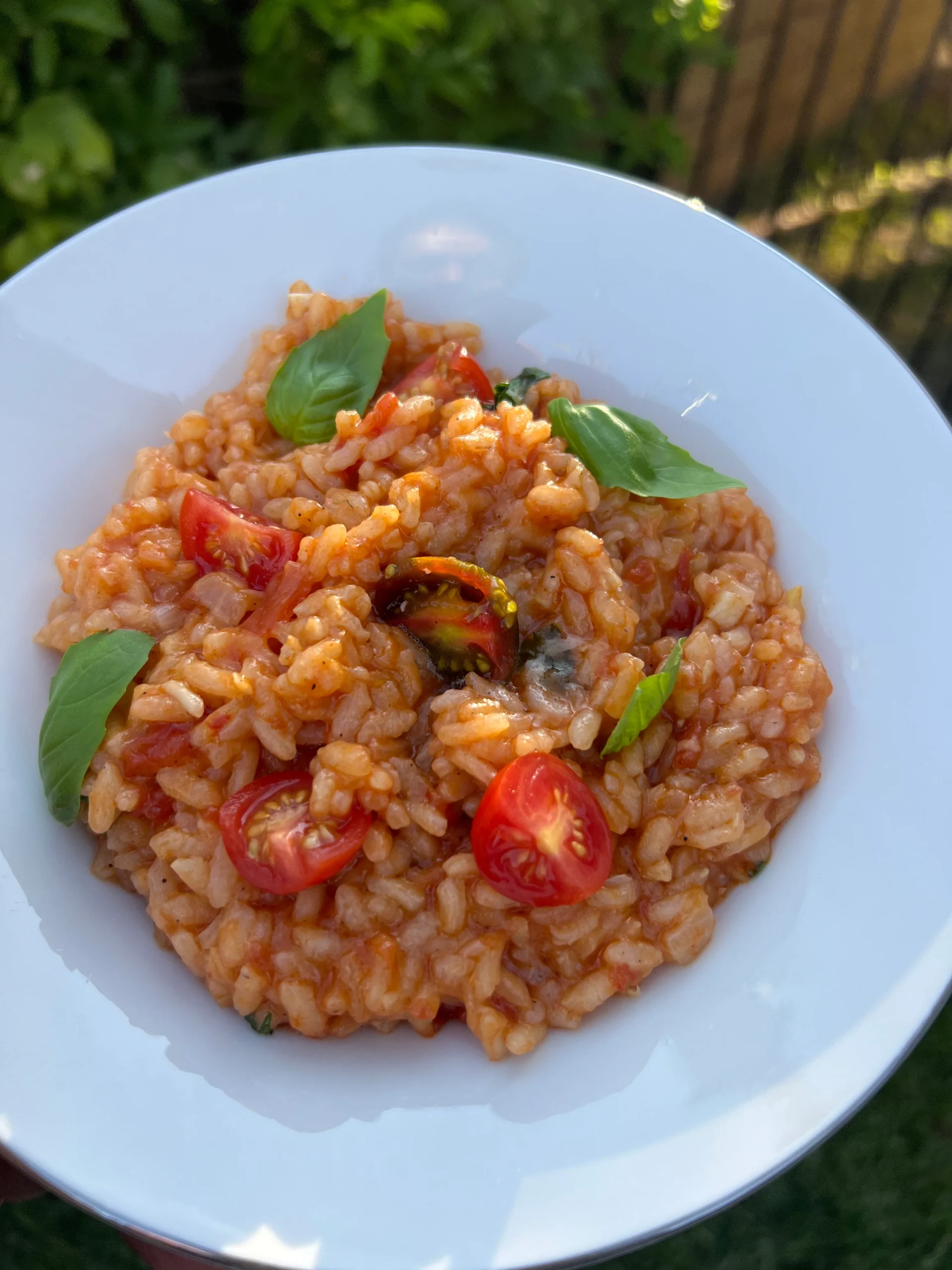
Caprese also makes an elegant starter before heartier dishes like risotto, roast chicken, or even a classic lasagna.
The Lesson of Caprese
Every time I serve Caprese Salad now, I think back to Capri, to that terrace overlooking the sea, to the sense that life could be both simple and extraordinary at the same time.
Italian cooking has this way of grounding you, of bringing you back to the essentials. It doesn’t chase after trends or fuss with unnecessary flourishes. It trusts that if you have a ripe tomato, a ball of fresh mozzarella, and a sprig of basil, you already have something perfect.
And honestly, it’s hard to argue with that.
So yes, some dishes are so simple, they feel almost too good to be true. Caprese Salad is one of them. It’s the taste of Italian summer captured in three ingredients, the colors of the flag on a plate, a reminder that food can be both humble and transcendent.
It’s not just a salad; it’s a celebration — of Italy, of summer, of the joy of keeping things uncomplicated. And for me, it will always carry the memory of that first taste on a shaded terrace in Capri, where I learned that sometimes the most unforgettable meals are also the simplest.

Caprese Salad (Insalata Caprese)
Ingredients
Method
- Cut the tomatoes and mozzarella into even slices, about ¼-inch thick.
- On a large serving platter, alternate slices of tomato and mozzarella. Tuck basil leaves between the layers.
- Sprinkle with sea salt and freshly cracked black pepper.
- Drizzle generously with olive oil. Add balsamic glaze if desired.
- Enjoy immediately as an appetizer, side dish, or light meal with crusty bread.
Notes
- Use the ripest, freshest tomatoes you can find — this salad lives or dies by their flavor.
- Buffalo mozzarella (mozzarella di bufala) is traditional and creamier than cow’s milk mozzarella.
- Add a sprinkle of oregano, or swap balsamic glaze for a splash of red wine vinegar for a tangier finish.
- Perfect with grilled meats, seafood, or as part of an antipasto spread.